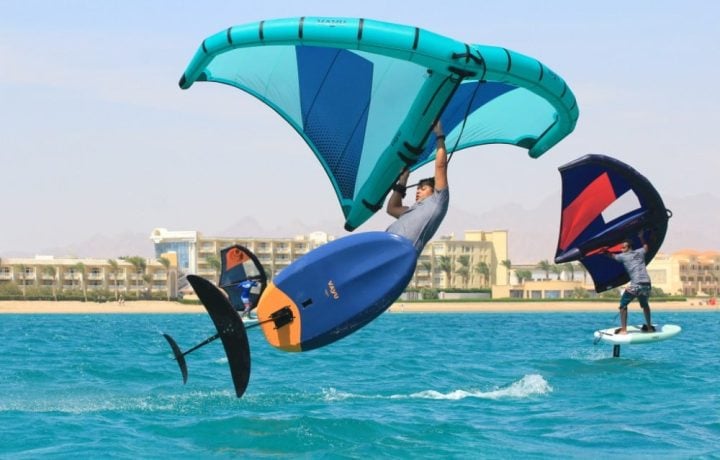
Learn to Wing Foil on Holiday: Lessons, Costs and Where to Go
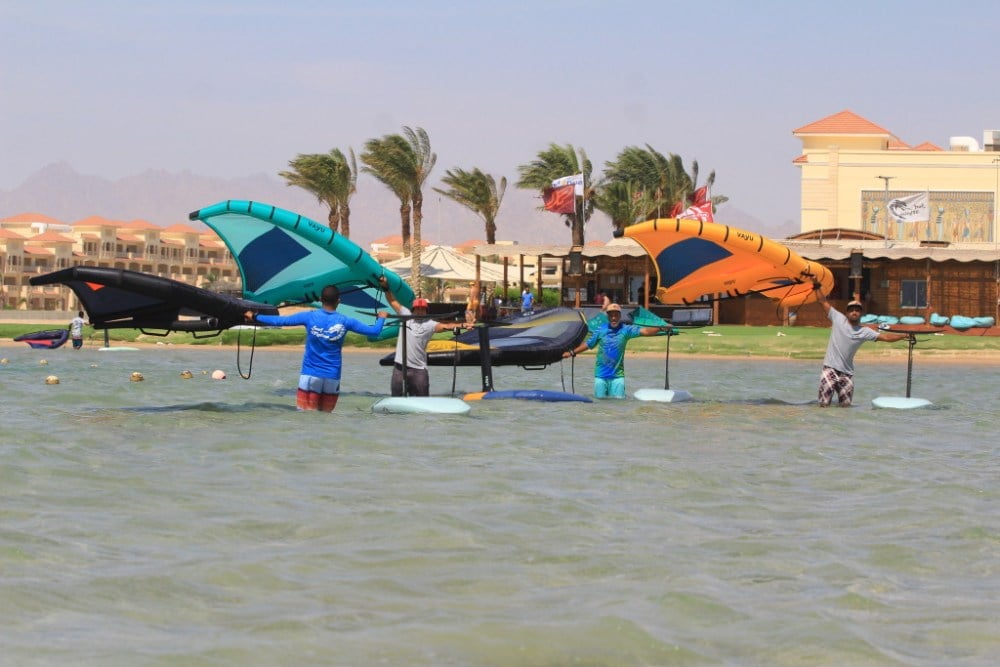
Most people need six to twelve hours of lessons before they can wing foil on their own. The quickest way to get those hours in is a week somewhere flat and windy with a lesson every day, rather than the odd session at home when the weather allows. A two hour lesson costs around €130 to €200. The best places to learn are warm, flat lagoons with a steady wind and a school on the beach, and Soma Bay, Alaçatı, Dakhla, the lagoon at Le Morne and Bonaire are where we send most beginners.
If you are completely new to the sport, start with our guide to what wing foiling is.
How long it takes to learn
You learn in two stages. First you get used to the wing on a big, stable board, normally something like a paddleboard, and most people are fine with that after a session or two. Then you move onto a board with a foil underneath and learn to fly it. That part takes longer, and you will fall off a lot along the way.
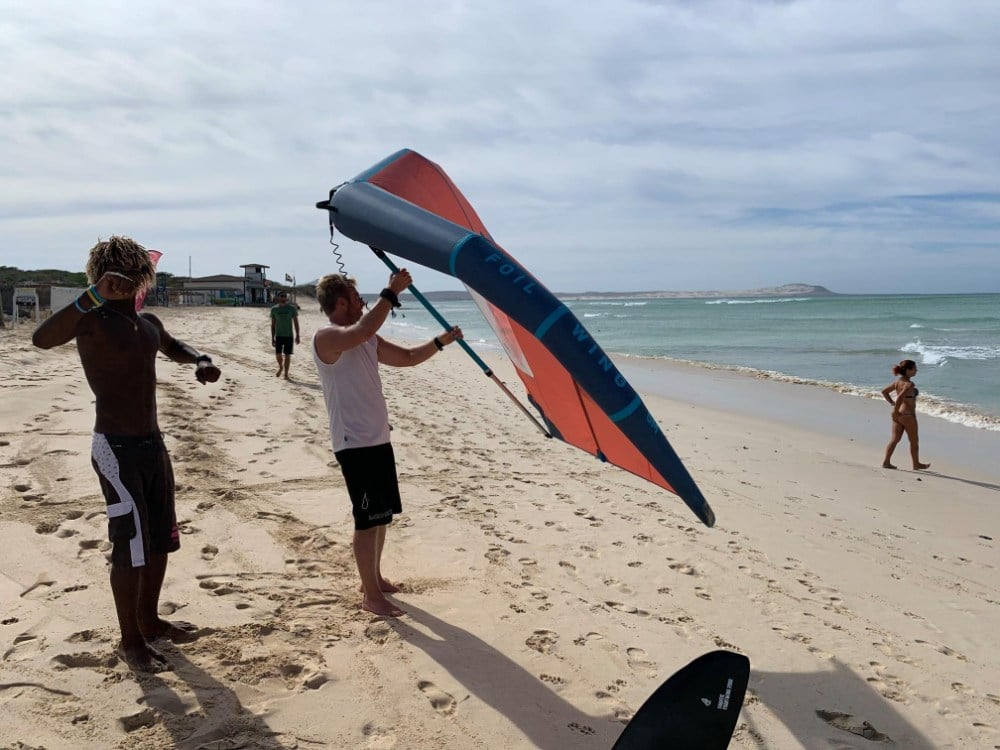
The schools’ own numbers are a good guide. Northern Kites, a school on the Wirral, reckons most people can ride on their own after 6 to 12 hours of instruction. ION CLUB, which has wing centres in Dakhla, Le Morne and Cape Verde among other places, says that after around ten sessions you will be flying and making your first long runs. With one to one lessons, flat water and a steady wind, most people have their first controlled flights within three to five days.
What makes the biggest difference to how quickly you get there:
- Having done another wind sport. If you already windsurf, kitesurf or sail you will pick it up much faster, and people who have kite foiled are quickest of all.
- The conditions. Flat water and a good, steady wind make everything easier. Chop and light, gusty wind slow everyone down.
- Private lessons with a boat. Once you are foiling you are in water too deep for an instructor to stand in, so the best schools follow you one to one from a boat or jet ski. In our experience it halves the time it takes to learn.
How many lessons to book
Most schools sell lessons in two hour blocks. ION CLUB’s beginner courses are typical: a six hour discovery course that gets you handling the wing and taking your first rides, and a ten hour course that takes you through to riding on your own. If you already windsurf or kite, you can usually skip the beginner course and go straight onto a foil course, like ION CLUB’s six hour foil intro.
For a first week we would book ten hours, two hours a day. That leaves a day or two spare in case the wind drops, and it is enough for most people to go home flying. Six hours will get you started if the budget is tight, but you will want more time on the water afterwards.
Group lessons are cheaper and fine for the first stage, when you are learning the wing in shallow water. For the foiling stage, pay for private lessons if you can. It is very hard for one instructor to look after two or three people in deep water, and one to one coaching from a boat or jet ski gets you flying much sooner.
What it costs
Lesson prices depend on the school, the season and whether the lessons are private or shared. Here are two sets of 2026 prices to give you an idea. ION CLUB publishes a guide price for its lessons across its centres. Dakhla Attitude is one of the hotels we use in Dakhla, with its own Duotone centre on the beach. Complete beginners there go on the one to one coaching, because the shared lessons are for people who can already windsurf or kite upwind.
| Lessons or hire | Price | Roughly in pounds |
|---|---|---|
| Two hour private lesson | €130 to €200 | £112 to £172 |
| Ten hours in a group of two | about €600 | about £516 |
The wing, board and foil come with the lessons, so you do not need to buy anything before your first trip. Kit hire only comes in once you can ride on your own.
The rest of the holiday is flights, a hotel and transfers. We put the whole thing together, lessons and kit included, as one ATOL protected booking and quote it for your dates. The quote is free, and every hotel page shows a starting price per night.
Where to learn
You want flat water, a steady wind that is not too light, water deep enough for the foil once you are flying, and a school on the beach with modern kit. These are the places we send most beginners.
Soma Bay, Egypt
Five hours from the UK, less than an hour’s transfer, and warm water for most of the year. The lagoon is big and flat, and the Red Sea’s northerly wind blows across it. Because it shelves gently you can learn the wing standing in the shallows, then move out a little way when you start to fly. The hotels are very good, which helps if not everyone in your group is on the water. Best from March to October, and good all year. See our Soma Bay wing foiling holidays.
Alaçatı, Turkey
The bay is wide and sheltered with a sandy bottom, and the wind is a thermal: it fills in late morning and gets stronger through the afternoon, most days from May to October. It blows side shore, along the beach, so if you get into trouble you drift along the shore rather than out to sea. The school next to the Biblos hotel teaches in English, and the wing, foil board and safety kit are included. Best from July to September. See our Alaçatı wing foiling holidays.
Dakhla, Morocco
The lagoon is huge and the wind blows 70 to 80 percent of the time in season. Most of it is flat and shallow, which is ideal for the first stage, and the channels give you deeper water once you start flying. The only awkward bit is getting there, with a domestic flight from Casablanca or Marrakech. Best from March to November, and still rideable in winter. See our Dakhla wing foiling holidays.
Le Morne, Mauritius
You learn in the big lagoon inside the reef, and the trade wind blows 20 to 30 knots from April to October, so you are rarely short of wind. The wing centre is on the main beach with a full rack of current Duotone kit. Keep an eye on the tide: on very low tides you can only foil in the deeper parts of the lagoon, and the centre has shorter masts for it. It is twelve hours on the plane and a proper luxury destination, so it works well if the rest of the family want a beach holiday. Best from June to November. See our Le Morne wing foiling holidays.
Bonaire
Lac Bay is a shallow lagoon behind a reef on the east of the island, with warm, clear water and the trade wind blowing across it most of the year. It is so easy and safe that the centres teach children from about nine. You need to go further out in the bay for foiling depth, so ask the centre where to ride at low tide. It is a long day of travel via Amsterdam. Best from December to August. See our Bonaire wing foiling holidays.
If you want the shortest flight, Porto Pollo in the north of Sardinia is about two hours from the UK. Beginners stay on the flat water side of the spit, and it is best from May to October. See our Sardinia wing foiling holidays.
| Where | Best months | Water for learning | Flight from the UK |
|---|---|---|---|
| Soma Bay, Egypt | March to October, good all year | Big flat lagoon that shelves gently | About 5 hours |
| Alaçatı, Turkey | July to September, May to October is good | Flat, sheltered bay with a sandy bottom | About 4 hours to Izmir |
| Dakhla, Morocco | March to November | Huge flat lagoon with deeper channels | Via Casablanca or Marrakech |
| Le Morne, Mauritius | June to November | Lagoon inside the reef, watch the tide | About 12 hours |
| Bonaire | December to August | Shallow lagoon, deeper water further out | Long day via Amsterdam |
| Porto Pollo, Sardinia | May to October | Flat side of the spit | About 2 hours |
Before you go
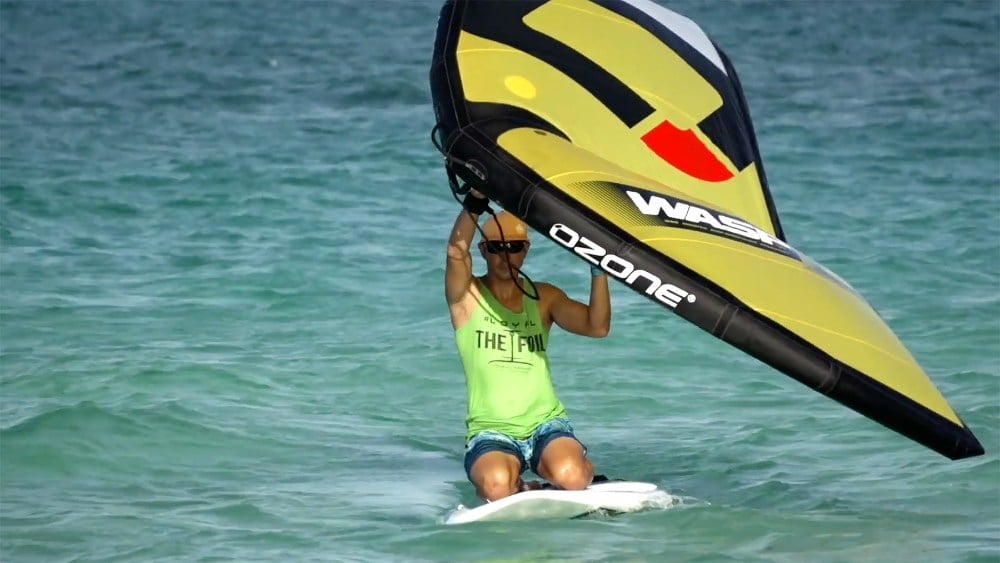
Take a pair of knee pads. You spend your first sessions kneeling on the board while you get the wing up, and bare knees go red raw very quickly. Everything else you need for the lessons comes from the school.
Book the lessons when you book the holiday rather than on the beach, so you know you have an instructor on the days you want. Pick your dates for the wind, too. Our list of the best wing foiling holidays has a month by month guide to where it blows.
Once you can fly and get back to where you started, the next things to learn are pumping and gybing. Most schools sell short courses for this, and ION CLUB’s is four hours. That is also the time to think about buying your own kit, when you know what size of board and wing suits you.
Common questions
How many wing foil lessons do I need?
Most people need 6 to 12 hours of lessons to ride on their own. For a first week we would book ten hours, two hours a day, which is enough for most people to go home flying. Private lessons with a boat get you there faster.
How much do wing foil lessons cost?
ION CLUB’s guide price is €130 to €200 for a two hour lesson and about €600 for ten hours in a group of three or four. At Dakhla Attitude in Dakhla, two hours of private coaching costs 1,584 to 2,420 dirhams, about £125 to £190, depending on the season. Lessons normally include the kit.
Is a week long enough to learn to wing foil?
Yes, for most people. With a lesson every day, flat water and a steady wind, most people have their first controlled flights within three to five days with one to one tuition.
Can I learn to wing foil if I have never done a water sport?
Yes. You need to be able to swim, but you do not need to have done any other water sport. It does help a lot if you have windsurfed, kitesurfed or sailed. Book private lessons and give yourself the full week.
Can children learn to wing foil?
Yes, from around the age of ten, or younger if they are already confident in the water. The centres in Bonaire teach children from about nine, and warm, flat lagoons like Bonaire and Soma Bay are the easiest places for them to start.
If you are not sure where to go for your dates, talk to us on +44 1273 921 001. We will tell you where the wind and water will be right for learning. Or have a look at our learn to wing foil holidays.